

For many years, patients who were diagnosed with late-stage pancreatic cancer were faced with the sobering truth that the cancer was, in almost all cases, inoperable. The reason for this was that the pancreas lies deep inside the abdomen, surrounded by major blood vessels which keep people alive.
Currently, there have been major changes in the field of medicine. As a result of a potent fusion of advanced oncology, precision robotics, and tough vascular engineering, the line between resectable and non-resectable tumors is steadily blurring. Previously regarded as a death warrant, the said tumors are being demoted into operable status. You should visit the best liver surgery doctor in Vadodara.
The Neoadjuvant Revolution: Shrinking the Enemy
Traditionally, surgery had always been the initial step, and if the tumor could not be removed with precision, then the case was regarded as incurable. Here comes neoadjuvant treatment, which involves the use of strong systemic treatments prior to any surgery.
Current combination treatments such as NALIRIFOX and advanced FOLFIRINOX are showing their extraordinary power against reducing localized tumors. In addition, targeted therapies such as daraxonrasib (RMC-6236), an oral multi-selective RAS inhibitor approved by the FDA, are targeting KRAS gene mutations which cause 90 percent of pancreatic cancer cases. The use of highly effective systemically applied therapy in the first place helps to separate the cancer from other parts of the body, thus making it surgically treatable.
Vascular Reconstruction: Redefining Surgical Boundaries
The main cause why pancreatic cancer is described as inoperable is due to vascular invasion, where the tumor encases or invades the superior mesenteric artery, celiac axis, and portal vein. In the past, even the slightest touch of these blood vessels in performing a Whipple procedure was considered fatal.
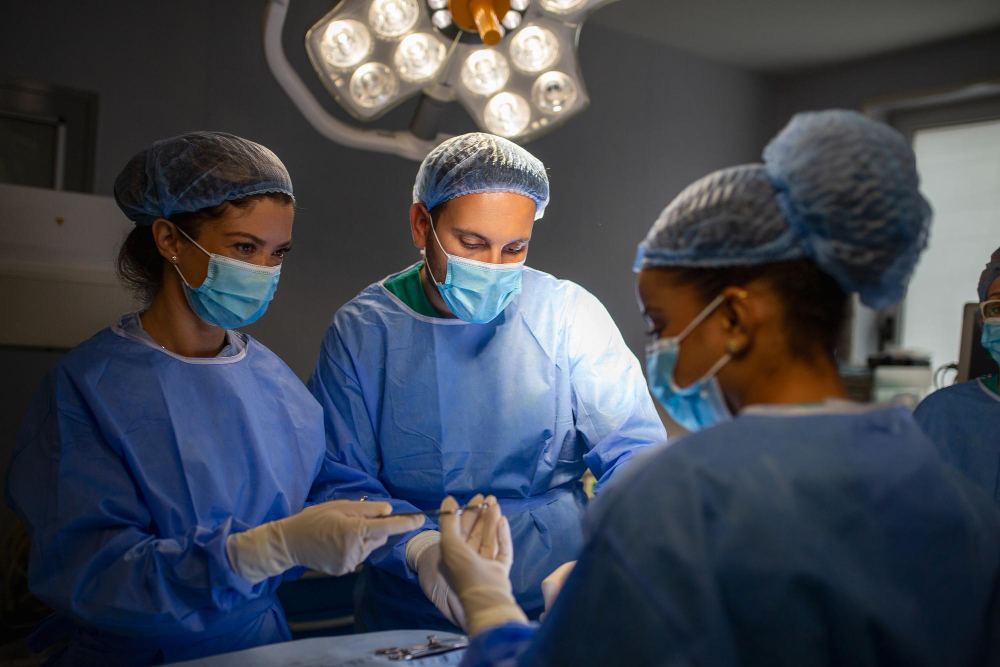
Modern-day elite surgical teams working at cancer specialty hospitals carry out vascular resection and reconstruction. Rather than shying away from operating on tumors close to the body’s large vessels, specialty-trained surgeons remove the part of the blood vessel affected by the tumor. In doing so, they reconstruct the whole blood pathway, using either artificial grafts or the veins from the patient’s body. Dr. Darshan Patel Gastro provides specialized surgical expertise in complex gastrointestinal procedures. This is done to obtain an R0 resection a clear margin devoid of any microscopic traces of cancer that is absolutely crucial for survival.
Robotic-Assisted Precision: Sub-Millimetre Accuracy
Despite the fact that the cancerous growth may be surgically removed, the conventional method of the Whipple operation is well-known to be very harsh on a person’s physical body.
With the advent of robotic-assisted surgeries, there has been a total transformation of the process. Working through small incisions, the surgeon uses a highly advanced machine that provides him with a magnified and high definition three-dimensional view of the abdominal cavity. In addition to that, the robotic arms have a wider range of movement than the human hand and also automatically filter out minute tremors of the hands. Such precision is very important in order to remove tumor tissue from the thin papery pancreatic ducts and main blood vessels. On the patient’s side, this changes the story from a tiring open cavity surgery into a less-invasive one.
The Rise of Bio-Electronic and Physical Ablation
Alternative localized destruction methods have become useful for those patients who cannot go through standard cutting surgeries despite undergoing chemotherapy.
- Tumor Treating Fields (TTFields): Examined closely by the FDA, this technology employs low-intensity electric fields through the application of skin patches to interfere physically with cancer cell division, without affecting any normal organs within the abdomen.
- Irreversible Electroporation (NanoKnife): In contrast to using heat and freezing techniques, this therapy introduces high voltage electric current into the tumor tissue itself. It creates tiny perforations in the cell membrane of the cancer cells, leading to cell death without affecting adjacent blood vessels and bile ducts.
The Power of the Multidisciplinary Team
In the end, there is one certainty about the current management of the pancreas, and that is that “inoperable” is not set in stone. It is just the first step. Taking the patient from inoperable to success takes an “interdisciplinary tumor board”—the combination of medical oncologists, geneticists, vascular surgeons, and robotic surgeons coming together to make one team.
Through the use of personalized genetic screening, tumor-reducing systemic treatment, and exceptional physical engineering, today’s medical community is turning the tables on pancreatic cancer, providing a glimmer of realistic hope where there once was none. You must visit the best pancreas surgery in Vadodara.